
Anyone who has ever read a firm’s earnings report or watched business news is probably familiar with phrases like “Q1 results,” “Q2 earnings,” or “the company posted strong fourth-quarter profits.” At first, this terminology may appear confusing, especially if you are not familiar with finance or investing.
In actuality, accountants and stock market specialists are not the only people who can comprehend fiscal quarters. Knowing what a fiscal quarter is can help you better comprehend financial reports, company performance, and even stock market movements, whether you’re an investor, business owner, student, or just someone curious about how firms function.
A common misconception is that all businesses operate according to the standard January–December schedule. That isn’t always the case, though. Many businesses select their own fiscal year based on what works best for them, even if some follow the regular calendar year. Fiscal years and fiscal quarters are relevant in this situation.
In this article, we’ll explain everything in simple language, from what a fiscal quarter is to why it is important.
What Is a Fiscal Quarter?
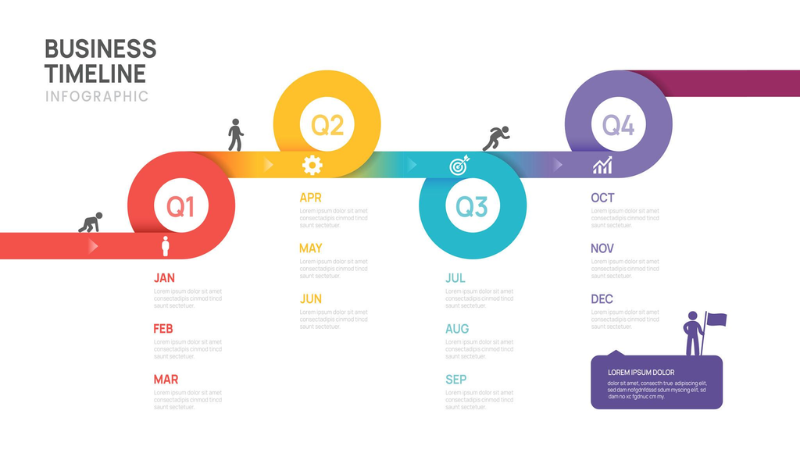
A fiscal quarter is a three-month accounting period within a company’s fiscal year. Every fiscal year is divided into four equal quarters, commonly referred to as:
- Q1 – First Quarter
- Q2 – Second Quarter
- Q3 – Third Quarter
- Q4 – Fourth Quarter
At the end of each quarter, companies prepare financial reports that show how the business performed during that quarter.
Publicly listed companies release these reports regularly because investors, regulators, and shareholders need updated information about the company’s financial health.
Simply put, a fiscal quarter works like a progress report for a business.
What Is a Fiscal Year?
A fiscal year (also called a financial year) is the 12-month accounting period a company uses to prepare its financial statements and calculate taxes.
Unlike the calendar year, a fiscal year doesn’t always begin on January 1.
Many companies select dates that better match their business cycle.
For example:
- One company may run from January to December
- Another may operate from April to March
- Another may choose October to September
Each fiscal year still lasts 12 months, regardless of when it begins.
Why Don’t All Companies Follow the Calendar Year?
Every business operates differently.
Some industries earn most of their revenue during certain seasons. Because of this, ending the financial year immediately after a busy sales period provides a much clearer picture of the company’s annual performance.
Calendar Year vs Fiscal Year
One of the biggest areas of confusion is understanding the difference between a calendar year and a fiscal year.
Here’s an easy comparison:
| Calendar Year | Fiscal Year |
| Always January 1 to December 31 | Any 12-month period chosen by the company |
| Same for everyone | Different companies may choose different dates |
| Standard worldwide calendar | Used mainly for accounting and taxation |
| Fixed dates | Flexible starting month |
For example:
A company using the calendar year reports its annual results from:
January 1 to December 31
Meanwhile, another company may choose:
April 1 to March 31
Both cover twelve months—but their reporting schedules are different.
Calendar Quarters vs Fiscal Quarters
People often use the terms calendar quarter and fiscal quarter interchangeably, but they aren’t always the same.
Calendar Quarters
Calendar quarters always follow the standard calendar.
Q1
January – March
Q2
April – June
Q3
July – September
Q4
October – December
Every organization using the calendar year follows these dates.
Fiscal Quarters
Fiscal quarters depend entirely on when a company’s fiscal year begins.
Suppose a business starts its fiscal year in October.
Its quarters would look like this:
- Q1: October – December
- Q2: January – March
- Q3: April – June
- Q4: July – September
The quarter names stay the same, but the months are different.
That’s why investors always check a company’s fiscal calendar before comparing quarterly results.
How Fiscal Quarters Work
Think of a fiscal year as a book with four chapters.
Each chapter represents one fiscal quarter.
At the end of each quarter, businesses take a moment to assess issues such as:
- How much money did we earn?
- Were sales higher than expected?
- Did expenses increase?
- Did profits improve?
- Are business goals on track?
These answers are published through quarterly earnings reports.
Investors use this information to decide whether they should:
- Buy shares
- Hold existing investments
- Sell their shares
Rather than waiting an entire year, quarterly reporting allows businesses to provide regular updates.
Why Fiscal Quarters Matter
Fiscal quarters are much more than accounting periods.
They influence nearly every major business decision.
Some of the biggest reasons companies use quarterly reporting include:
Measuring Performance
Management can quickly identify whether business performance is improving or declining.
Instead of discovering problems after twelve months, they can act every three months.
Helping Investors
Shareholders want regular updates.
Quarterly reports allow investors to understand whether a company is growing as expected.
Supporting Better Decision-Making
Executives make decisions based on quarterly financial data.
- Plans for hiring
- Projects for expansion
- Budgets for marketing
- New product releases
- Cost savings
Meeting Regulatory Requirements
Public companies are legally required in many countries to release periodic financial statements.
Quarterly reporting improves transparency and builds investor confidence.
What Happens During Quarterly Earnings Season?
Every few months, companies publish their quarterly earnings.
This period is known as earnings season.
In earnings season, businesses announce the following :
- Income
- Profit
- Profits per share
- Future direction
- Commentary on management
Because these reports frequently affect stock values, investors pay close attention.
For example:
If a company reports stronger-than-expected profits, its share price may rise.
If earnings disappoint investors, the stock may fall.
Because of this, earnings season is one of the busiest times in the stock market.
How Fiscal Quarters Are Used Around the World
One interesting thing about fiscal years is that there isn’t a single global standard. While many people assume every country follows the January-to-December calendar, governments and businesses often choose different financial years based on their economy, budgeting process, climate, or industry cycles.
Here are a few examples:
| Country | Fiscal Year |
| India | April 1 – March 31 |
| United States (Federal Government) | October 1 – September 30 |
| United Kingdom | April 6 – April 5 (for personal taxation) |
| Japan | April 1 – March 31 |
| Australia | July 1 – June 30 |
| China | January 1 – December 31 |
These different reporting periods explain why companies from different countries may release their annual results at different times of the year.
Real-World Examples of Fiscal Quarters
Understanding fiscal quarters becomes much easier when you look at actual companies.
Apple
Apple doesn’t follow the regular calendar year.
Its fiscal calendar looks like this:
- Q1: October–December
- Q2: January–March
- Q3: April–June
- Q4: July–September
This schedule allows Apple to include holiday-season iPhone sales in its first-quarter results, giving investors a clearer picture of its strongest sales period.
Amazon
Amazon follows the calendar year.
Its quarters are:
- Q1: January–March
- Q2: April–June
- Q3: July–September
- Q4: October–December
Because Amazon experiences huge shopping activity during Black Friday and Christmas, its Q4 often generates the highest revenue.
Indian Companies
Most listed Indian companies follow India’s financial year:
April 1 to March 31
Their fiscal quarters generally look like:
- Q1: April–June
- Q2: July–September
- Q3: October–December
- Q4: January–March
If you invest in Indian stocks, these are the reporting periods you’ll usually see.
Advantages of Using Fiscal Quarters
Fiscal quarters aren’t just useful for accountants—they benefit businesses, investors, and even customers.
- Better Financial Tracking
- Improved Business Planning
- Greater Transparency
- Easier Performance Comparisons
Challenges of Quarterly Reporting
While quarterly reporting offers many advantages, it isn’t perfect.
- Short-Term Pressure
- Seasonal Differences
- Increased Reporting Costs
Why Fiscal Quarters Matter to Investors
If you’re investing in stocks, understanding fiscal quarters is incredibly valuable.
Quarterly reports often answer important questions like:
- Is the company growing?
- Are profits increasing?
- Is debt under control?
- Are sales improving?
- What does management expect for the future?
Professional investors rarely buy or sell shares without reviewing quarterly earnings.
Even if you’re a beginner investor, learning how fiscal quarters work can help you better understand company performance and market news.
Understanding Quarterly Reports
If you’re new to reading company earnings, keep these simple tips in mind:
- Always check which fiscal calendar the company follows.
- Compare the same quarter across different years.
- Don’t judge a company based on one quarter alone.
- Read management’s comments along with the financial numbers.
- Watch revenue, profit, cash flow, and earnings per share together.
These habits can make financial reports much easier to understand.
Conclusion
Fiscal quarters may seem like accounting jargon at first, but they’re actually one of the simplest ways to understand how a business is performing throughout the year.
Anyone who is interested in business, finance, or investing should understand fiscal quarters. Once you know how they work, terms like Q1 earnings, Q4 profits, or quarterly growth become much easier to understand.
The next time you see a company announcing its quarterly results, you’ll know exactly what those numbers represent and why they matter.
FAQs
How many fiscal quarters are there in a year?
There are four fiscal quarters in every fiscal year, and each quarter covers three consecutive months.
Is a fiscal quarter the same as a calendar quarter?
No. A calendar quarter always follows the January-to-December calendar, while a fiscal quarter follows a company’s chosen financial year, which may begin in any month.
What is a fiscal year?
A fiscal year is a 12-month accounting period that a company or government uses for financial reporting, budgeting, and tax purposes. It doesn’t always match the calendar year.
Why are quarterly earnings reports important?
Quarterly reports help investors understand how a company is performing throughout the year instead of waiting for annual results.
Do all companies have the same fiscal year?
No. Every company can choose its own fiscal year, depending on its business requirements and local regulations.
Which companies follow the calendar year?
Many companies, including some global technology firms, use January 1 to December 31 as their financial year because it simplifies reporting.
Does Apple follow the calendar year?
No. Apple follows a fiscal year that starts in October rather than January.
What is the difference between fiscal quarters and financial quarters?
There is no difference. Both terms refer to the same three-month accounting periods within a fiscal year.
Can a company’s fiscal year change?
Yes. Companies can change their fiscal year, although they must follow legal and regulatory procedures before doing so.
How long is each fiscal quarter?
Each fiscal quarter lasts approximately three months.
Are taxes filed every quarter?
Some businesses pay estimated taxes quarterly, while annual tax filing requirements depend on local tax laws.
Why do retailers often choose different fiscal years?
Retailers often schedule their fiscal year to include the holiday shopping season, giving a clearer picture of annual sales performance.
How do analysts use fiscal quarters?
Financial analysts compare quarterly performance over multiple years to identify business trends, growth patterns, and future opportunities.
Why is Q4 often the strongest quarter for retailers?
Q4 usually includes major shopping festivals and holiday seasons, leading to higher consumer spending and stronger sales.
What is the year-over-year (YoY) quarterly comparison?
It compares the same quarter from two different years, helping eliminate seasonal differences when measuring growth.
What is quarter-over-quarter (QoQ) growth?
Quarter-over-quarter growth compares one quarter’s financial results with the immediately preceding quarter.