
PayPal has come a long way from its early days as an online payment service. It has grown into a global fintech platform that connects consumers, merchants, financial institutions, and digital businesses.
The basic idea behind the PayPal business model is simple: make digital payments easier, faster, and more secure.
But there is much more happening behind that simple checkout button.
PayPal operates as a two-sided payment ecosystem. Consumers use it to make purchases, store payment details, send money, and access financial services, while merchants use PayPal to accept payments, improve checkout experiences, manage disputes, and reach customers around the world.
The company has also expanded its offering through products such as PayPal Checkout, Venmo, Pay Later, credit products, subscription tools, fraud protection, and merchant services.
Most of PayPal’s revenue comes from transaction fees, but the company also earns money through services such as currency conversion, cross-border payments, financing, and other merchant-focused products.
This article explains how the PayPal business model works, who its customers are, how it makes money, how the platform operates, and the strategies it uses to grow.
How the PayPal Business Model Works
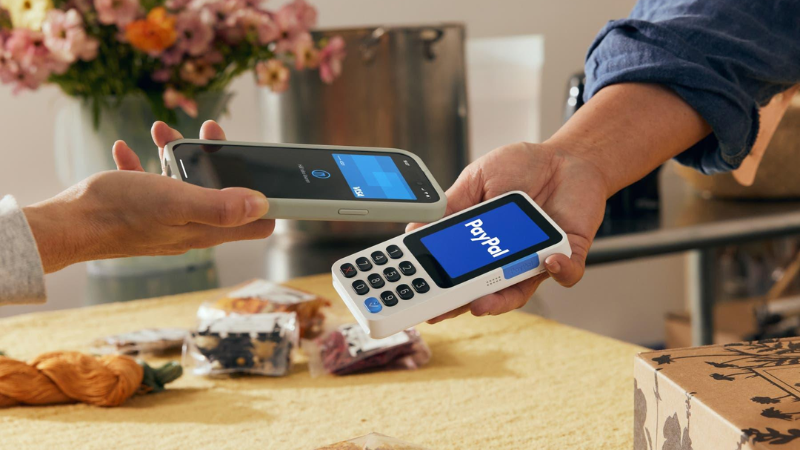
PayPal runs a hybrid fintech platform model that brings together payment processing, digital wallets, merchant checkout, and embedded financial services.
At the centre of the model is the relationship between buyers and sellers.
A customer wants to pay quickly and securely. A merchant wants the transaction to go through smoothly, with as little friction as possible. PayPal sits between those two sides and helps make that transaction happen.
According to the source, PayPal’s model combines:
- Payment platform services
- Digital wallet functionality
- Merchant payment tools
- Embedded finance
- Cross-border payment capabilities
This gives the company a role in ecommerce, mobile payments, subscriptions, apps, marketplaces, and international transactions.
PayPal’s Value Proposition
For consumers, convenience and trust are important selling points.
In addition to providing tools for international transactions, refunds, disputes, and recurring payments, PayPal can simplify checkout for businesses.
For platforms and financial partners, PayPal provides payment infrastructure, APIs, compliance support, and risk-management capabilities.
In other words, PayPal is not simply helping people send money. It is trying to make the entire payment experience smoother.
Who Uses PayPal?
PayPal serves several customer groups.
Online shoppers
Consumers use PayPal because they want a quick and familiar way to pay online. Frequent ecommerce buyers and people shopping across borders are important parts of this group.
Merchants
Ecommerce companies, direct-to-consumer brands, service businesses, and other sellers use PayPal to accept payments and improve the checkout experience.
Small businesses and freelancers
Smaller businesses can use PayPal for invoices, international payments, and receiving money without building their own payment infrastructure.
Platforms and marketplaces
Apps, marketplaces, and other digital platforms can integrate PayPal through APIs and use its payment and compliance infrastructure.
These groups support one another, which is an important part of PayPal’s overall business model.
How PayPal Makes Money
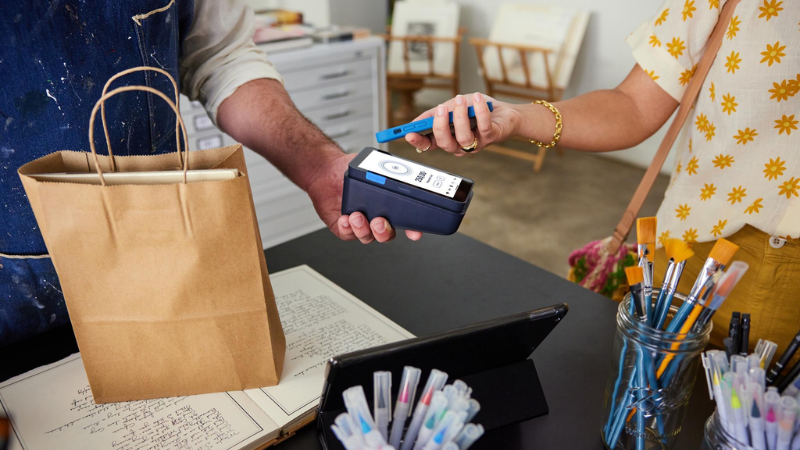
PayPal has a layered monetization strategy. Its core revenue comes from transactions, while additional services create more ways to earn from the same customer relationship.
Merchant Transaction Fees
Transaction fees are the main revenue engine.
When customers make payments through PayPal Checkout, card processing, or wallet-based services, merchants pay a fee.
The advantage of this model is that revenue grows with payment volume. More transactions generally mean more transaction revenue.
Cross-Border Fees and Currency Conversion
International payments provide another revenue opportunity.
PayPal can earn through the currency conversion spreads, cross-border processing charges, and multi-currency settlement services.
As online businesses sell to customers in different countries, these services become more useful and create another source of income.
Merchant Services
PayPal also offers tools that go beyond basic payment processing.
These include fraud protection, dispute management, chargeback support, recurring billing, subscription management, invoicing, and payment links.
These services can generate additional revenue while making PayPal more valuable to merchants.
Credit and Financing
PayPal also uses financing products as part of its ecosystem.
The source mentions Pay Later and instalment products, merchant financing, working-capital programmes, and consumer credit offerings in some markets.
Wallet-Related Income
Depending on the market and regulations, PayPal can also earn income through stored balances, financial partnerships, and related banking services.
PayPal’s Operational Model
A payment may take only a few seconds for a customer, but there is a lot happening in the background.
PayPal has to keep its platform reliable while handling risk, fraud, compliance, disputes, and settlements.
Its major activities include maintaining payment infrastructure, supporting merchant APIs, monitoring suspicious transactions, handling refunds and chargebacks, and improving checkout performance.
Fraud prevention is especially important. PayPal needs to identify suspicious activity without creating unnecessary friction for legitimate customers.
The company also has to meet financial regulations in different countries, including requirements related to customer verification, anti-money laundering, payments, and data handling.
PayPal’s Strategic Partnerships
Partnerships are a major part of the PayPal business model.
The company works with ecommerce platforms, payment networks, banks, merchants, marketplaces, technology companies, and other financial partners.
These partnerships help PayPal reach more customers and merchants without having to build every distribution channel itself.
For example, ecommerce platforms can make PayPal easier for merchants to add, while banking and payment relationships support processing and settlement.
Partnerships can also help PayPal enter new markets where local payment methods, regulations, and financial systems differ.
PayPal Growth Strategy
PayPal’s growth depends on getting more people and businesses to use the platform and then giving them more reasons to stay.
One important driver is trust and habit. When consumers have a smooth payment experience, they may return because the process is familiar.
Merchant-led distribution is another important part of growth. Every checkout page that offers PayPal can introduce the service to another customer.
PayPal’s Competitive Advantage
The payments industry is crowded, so PayPal needs more than a simple payment button to protect its position.
One advantage is its two-sided network. More consumers can encourage more merchants to accept PayPal, while more merchants can make the service more useful to consumers.
Trust is another important factor. A familiar payment brand can make shoppers feel more comfortable, especially when buying from an unfamiliar business or shopping internationally.
PayPal’s fraud detection, dispute systems, payment infrastructure, and merchant tools also strengthen its position.
The company has gradually built a broader ecosystem around payments, including checkout, wallets, recurring billing, cross-border services, financing, and merchant products.
Challenges Facing PayPal
Running a global payment platform comes with serious challenges.
Fraud and chargebacks can increase as transaction volumes grow. Payment failures can also cost merchants money and damage customer trust.
Competition is another concern, with many digital wallets, payment gateways, banks, and fintech companies competing for the same customers.
Regulation can make expansion more complicated because payment and data rules vary between countries.
PayPal therefore has to keep investing in security, technology, compliance, customer support, and partnerships.
Lessons Entrepreneurs Can Learn From PayPal
The PayPal business model offers some useful lessons for entrepreneurs.
First, solve a problem that people genuinely need to solve. PayPal focused on making an essential activity—moving money—simpler.
Second, build trust into the product from the beginning. This is especially important when customers are dealing with payments or sensitive information.
Third, keep the main experience simple. A complicated product can lose users even when the technology behind it is impressive.
Finally, look for ways to build additional revenue around the core service. PayPal started with payments but expanded into wallets, merchant tools, financing, subscriptions, and other services.
Conclusion
The PayPal business model is built around making digital payments simple, secure, and convenient, but its success comes from much more than processing transactions.
PayPal connects consumers and merchants while also working with banks, payment networks, platforms, and technology partners.
Its main revenue source is transaction fees, with additional income coming from cross-border payments, currency conversion, merchant services, financing, and other products.
The real strength of the model comes from the ecosystem. More merchants can attract more consumers, and more consumers can make PayPal more valuable to merchants.
For entrepreneurs, the biggest takeaway is not to copy PayPal’s product. It is to understand the thinking behind the business: solve an important problem, remove friction, build trust, create strong partnerships, and develop several revenue streams around a useful core service.
FAQ
What is the PayPal business model?
PayPal uses a hybrid fintech business model that combines digital payments, online wallets, merchant services, and financial products.
What are PayPal’s other revenue streams?
Beyond transaction fees, PayPal earns from merchant tools, financing and Buy Now, Pay Later products, currency services, and certain wallet-related income. This gives the company several ways to monetise its ecosystem.
What is PayPal Checkout?
PayPal Checkout is a payment solution that allows customers to pay online using PayPal and supported payment methods. It is designed to make the checkout process faster and easier for merchants and shoppers.
What role does fraud prevention play in PayPal’s business model?
Fraud prevention is a major part of PayPal’s operations. The company uses transaction and behavioural signals to detect suspicious activity while trying to avoid unnecessary payment blocks for legitimate customers.
Why are partnerships important to PayPal?
Partnerships with ecommerce platforms, banks, payment networks, marketplaces, and technology companies help PayPal expand its reach. They also make it easier for businesses to integrate PayPal into their existing systems.
What is the network effect in PayPal’s business model?
The network effect means growth on one side of PayPal’s platform can support growth on the other. More merchants create more places for consumers to use PayPal, while more consumers make the service valuable to merchants.
What are the biggest challenges for PayPal?
PayPal has to manage fraud, chargebacks, payment failures, competition, and changing financial regulations. Operating across many countries also makes compliance and local market expansion more complex.
Can entrepreneurs learn from the PayPal business model?
Yes. The model shows the value of solving an important problem, creating a simple user experience, building trust, and adding revenue streams around a strong core service.