
Every startup begins with excitement, ambitious goals, and a vision for growth. But no matter how innovative the business idea is, one thing determines how long that journey can continue.
This is where burn rate becomes one of the most important financial metrics for founders, investors, and business owners. It tells you how quickly a company is spending its available cash before it starts generating enough revenue to cover its expenses.
Finance specialists are not the only ones who need to understand burn rate. Understanding burn rate can help you make better financial decisions and prevent unexpected financial difficulties, whether you’re starting a new business, managing an existing one, or intending to invest in one.
In this guide, we’ll explain what burn rate means, the different types, how to calculate it, real-life examples, and practical ways to keep your business financially healthy.
What Is a Burn Rate?
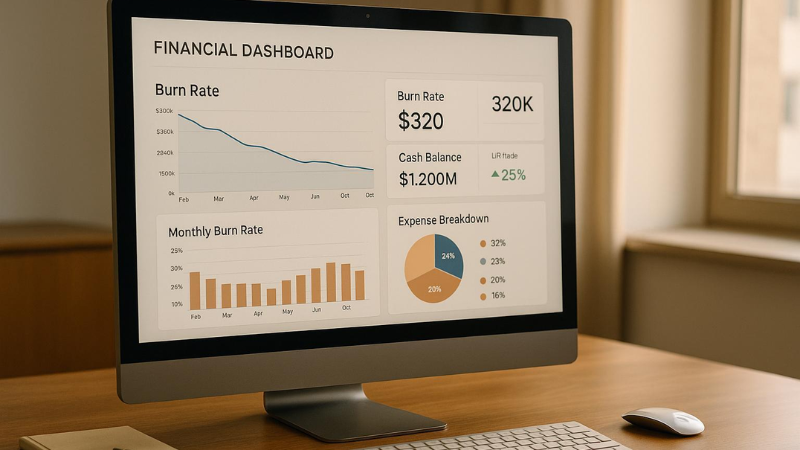
A burn rate is the amount of money a company spends over a specific period—usually every month—before it becomes profitable.
The term is most commonly used for startups because new businesses often spend money on product development, salaries, marketing, and operations long before they generate steady income.
Simply put:
Burn rate shows how fast your business is “burning” through its available cash.
For example, if your startup spends $50,000 every month while earning only $15,000, your business is operating at a loss and using its cash reserves to stay afloat.
The higher the burn rate, the less time a company has before it needs additional funding or reaches profitability.
Types of Burn Rate
Although people often refer to burn rate as a single metric, there are actually two main types.
1. Gross Burn Rate
Gross burn rate measures the total amount of money a business spends each month, regardless of how much revenue it earns.
It covers various types of topics, like:
* Salaries for employees
* Rent for an office
* Promotion
* Subscriptions to software
* Utilities
* Costs associated with operations
The gross burn rate is just $80,000 per month if monthly expenses come to $80,000.
Founders can better understand their entire spending patterns by using gross burn.
2. Net Burn Rate
Net burn rate provides a more accurate picture because it considers both expenses and revenue.
Instead of looking only at spending, it measures how much money the business actually loses every month.
Example :
- Monthly expenses: $80,000
- Monthly revenue: $30,000
Net Burn Rate = $50,000 per month
Burn Rate Formula
To calculate burn rate, businesses use simple formulas.
Gross Burn Rate
Gross Burn Rate = Total Monthly Operating Expenses
Net Burn Rate
Net Burn Rate = Monthly Expenses − Monthly Revenue
These formulas make it easy to monitor how much cash the business is using every month.
Real-World Example
Imagine a software startup has:
- Cash in the bank: $600,000
- Monthly operating expenses: $90,000
- Monthly revenue: $35,000
Its calculations would be:
Gross Burn Rate
= $90,000
Net Burn Rate
= $90,000 − $35,000
= $55,000
This means the startup is losing $55,000 every month.
Steps to Calculate Burn Rate
Calculating burn rate is straightforward.
Step 1: Calculate Your Monthly Expenses
Include all recurring business costs, such as:
- Payroll
- Rent
- Marketing
- Insurance
- Software
- Utilities
Step 2: Calculate Monthly Revenue
Add all income generated during the same month.
Step 3: Apply the Formula
Subtract revenue from expenses to determine your net burn rate.
Factors Which Affect Burn Rate
Several factors can increase or decrease a company’s burn rate.
- Rapid Hiring
- Marketing Investment
- Product Development
- Office Expansion
- Revenue Growth
Burn Rate vs. Cash Runway
People often confuse burn rate with runway, but they measure different things.
| Measures monthly cash loss | Measures how long available cash will last |
| Indicates spending speed | Indicates remaining survival time |
| Calculated monthly | Calculated using cash reserves |
For example:
- Cash available: $500,000
- Net Burn Rate: $50,000
Cash Runway = 10 months
Together, these metrics help businesses understand both their spending and their financial future.
How to Reduce Burn Rate
Let’s understand how to reduce the Burn Rate
However, businesses should still manage spending carefully.
Some practical ways include:
- Increase sales and recurring revenue.
- Reduce unnecessary operational expenses.
- Delay non-essential hiring
- Automate repetitive processes
- Review software subscriptions regularly.
- Improve marketing efficiency
- Focus on profitable products or services.
- Create realistic financial forecasts.
Small improvements each month can significantly extend a company’s financial runway.
Is a High Burn Rate Always Bad?
Not necessarily.
A high burn rate can be completely normal for startups investing in product development, hiring talented employees, or entering new markets.
Some of the important question is:
Is the spending creating sustainable growth?
Investors may have a favorable opinion of the burn rate if higher expenditure results in improved revenue, client acquisition, and a stronger market position.
Spending a lot of money on a regular basis without seeing results, however, can pose a significant risk to your finances.
The business should always get closer to profitability through healthy growth.
Conclusion
One of the most important financial indicators for new and expanding companies is burn rate. It helps founders estimate how long they can operate before further investment or profitability is required and demonstrates how quickly a company is utilizing its cash.
Businesses can reduce expenses, enhance financial planning, and make better strategic choices by routinely monitoring burn rate. Knowing burn rate gives you a better idea of a company’s financial stability and long-term potential, whether you’re starting a startup or assessing an investment opportunity.
FAQ
What is a burn rate in business?
The amount of money a company spends each month before turning a profit is known as its burn rate. It aids businesses in determining how quickly they are depleting their cash reserves and how long they can run without more funding.
What are the different types of burn rate?
There are two main types of burn rate:
- Gross Burn Rate, which measures total monthly operating expenses.
- Net Burn Rate, which measures monthly cash loss after subtracting revenue from expenses.
How do you calculate burn rate?
To calculate gross burn rate, add up all monthly operating expenses. To calculate net burn rate, subtract your monthly revenue from your monthly expenses. The result shows how much cash your business is losing each month.
What is the difference between burn rate and cash runway?
Burn rate tells you how much money your business spends every month, while cash runway estimates how many months your business can continue operating before it runs out of cash based on its current burn rate.
What causes a company’s burn rate to increase?
A burn rate usually increases due to rapid hiring, higher marketing costs, office expansion, research and development expenses, product launches, or other investments aimed at growing the business.
Can profitable companies have a burn rate?
The term burn rate is generally used for companies that are spending more money than they earn. Once a business consistently generates profits and positive cash flow, burn rate becomes a less relevant financial metric.