
Starting a business in another country can feel complicated at first. Try to understand the local regulations, selecting a legal structure, preparing paperwork, handling taxes, and understanding how the market functions are all necessary.
Latvia can be an appealing option for entrepreneurs who want to establish a business in the European Union. The country has a strategic location in the Baltic region, a growing economy, and a business environment that is open to foreign investors. Riga, the capital, is also an important economic centre with well-developed infrastructure.
The process becomes much easier when you know what needs to be done.
This guide explains the main steps for starting a business in Latvia in 2026, from choosing a company structure to registering your business, managing taxes, hiring employees, and exploring government support.
Why Start a Business in Latvia?
Latvia’s location is one of its biggest advantages.
The country sits on the Baltic Sea and connects the European Union with markets to the east. For companies involved in trade, manufacturing, logistics, or other cross-border activities, that position can be useful.
Access to the larger European market is another benefit of being an EU member. Being a member of the World Trade Organization and the European Union can facilitate cross-border business and trade.
There is also support available for entrepreneurs. The Investment and Development Agency of Latvia (LIAA) and other organisations provide guidance and help businesses understand the local market.
Several sectors also stand out, including wood processing, machinery and metalworking, information technology and communications, food, and agriculture.
Choose the Right Business Structure
Before registering your company, decide how you want the business to be legally organised.
Latvia offers several options, and your choice affects liability, taxation, ownership, and the amount of paperwork you will need to deal with.
Limited Liability Company (SIA)
The SIA, or Sabiedrība ar Ierobežotu Atbildību, is the most common choice for businesses in Latvia.
One of its main advantages is limited liability. In simple terms, the company is legally separate from its owners, so their personal assets are generally protected from business liabilities.
An SIA is suitable for many small and medium-sized businesses. You will need founding documents, including articles of association, and you must arrange the required share capital before registering the company.
Partnerships
A partnership can make sense when two or more people want to run a business together.
The partners share responsibility for running the business and its financial obligations. Because personal responsibility can be broader than with an SIA, it is important to understand the risks before choosing this option.
Self-Employment
Self-employment can be a simpler route for freelancers, consultants, and people working independently.
The registration process is generally less complicated than forming a company. However, there is no separate legal boundary between the individual and the business, which means the owner does not receive the same liability protection as an SIA.
How to Register a Business in Latvia
Once you have decided on the structure, you can begin the company formation process.
The Register of Enterprises of the Republic of Latvia is the main government body involved in registering companies.
1. Choose and Check Your Company Name
Start by selecting a name that is best for your company.
The name should be distinct, not deceptive, and not too close to an already-existing company name. The Register of Enterprises allows you to verify the availability of names.
Taking care of this before preparing your paperwork can save you from having to start over later.
2. Prepare Your Documents
The next step is to prepare the documents required for registration.
The articles of association are particularly important because they set out information about the company’s structure, management, and internal rules.
Depending on your company type, you may also need an application form, proof of share capital, a list of shareholders, and written consent from board members. The source also notes that notarised signatures may be required for certain documents.
3. Arrange the Share Capital
A standard SIA generally requires €2,800 in share capital, according to the source. At least half of this amount must be paid before registration.
Latvia also has a low-capital SIA option that can be formed with as little as €1 in share capital, although additional conditions apply to this structure.
Make sure you know which SIA option best suits your business plans before submitting your application.
4. Submit the Application
Once your documents are ready, file them with the Commercial Register through the Register of Enterprises.
It is important to check every document carefully before submission. Missing information or incorrect paperwork can delay the process.
After the application is accepted, your company becomes officially registered and can begin operating in accordance with the applicable rules.
Understand Licensing and Compliance
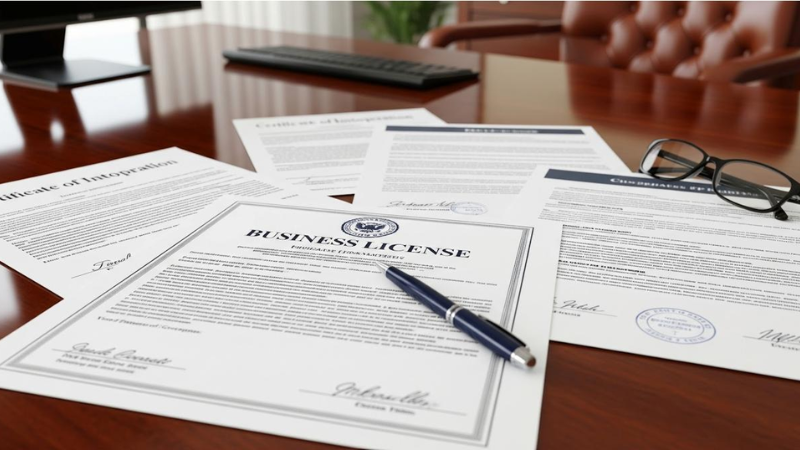
Registering a company does not automatically give you permission to carry out every type of business.
Some industries have their own licences and permits. The source specifically mentions areas such as construction, financial services, transport, and food service.
The requirements depend on what your company actually does.
It is better to check this before launching rather than discovering after registration that you need another approval. LIAA can also help businesses understand the requirements connected to their industry.
Understand Latvia’s Tax System
Taxes should be part of your planning from the beginning.
According to the source, Latvia’s corporate income tax rate is 20%, and the tax is generally applied when profits are distributed rather than simply retained and reinvested in the company.
The standard VAT rate is 21%. Businesses may need to register for VAT once they pass the applicable annual turnover threshold.
If you employ staff, you will also need to deal with payroll taxes, including personal income tax and social security contributions.
Other taxes can apply depending on what the business owns or does. For example, the source mentions real estate tax and excise taxes on certain products.
Keep Accurate Financial Records
Bookkeeping is one of those jobs that is easy to put off when you are busy building the business.
It should not be.
Latvian businesses need to maintain accurate financial records showing their income and expenses. These records are important for tax calculations and annual reporting.
At the end of the financial year, businesses must prepare an annual report and submit the required information to the State Revenue Service.
For a new entrepreneur, especially someone unfamiliar with Latvian tax rules, working with an accountant can make this part much easier.
Look Into Government Support
Latvia provides several forms of support for businesses and foreign investors.
The Investment and Development Agency of Latvia (LIAA) is one of the main organisations to look at. It offers support programmes, guidance, and incubator opportunities for businesses at different stages of development.
Some programmes focus on areas such as technology, green energy, and smart manufacturing.
The source also notes that a strong business plan can be important when applying for startup support. Businesses may need to demonstrate that their idea has growth potential and could contribute to job creation.
Consider Latvia’s Special Economic Zones
Special Economic Zones, or SEZs, may be worth looking at if your business fits the activities they are designed to support.
The source identifies SEZs in places such as Riga, Liepāja, and Rēzekne. Companies operating within qualifying zones can receive significant tax benefits, including reductions in corporate income tax and real estate tax.
This can be particularly attractive for companies involved in manufacturing, logistics, and high-tech activities.
However, eligibility and the exact benefits depend on the rules of the relevant SEZ, so this needs to be checked before making a location decision.
Hiring Employees in Latvia

As your business grows, you may need to hire people.
Latvia has employment rules covering areas such as contracts, working hours, pay, leave, workplace safety, and ending employment.
A written employment contract should clearly explain the main terms of the job, including duties, salary, working hours, and leave.
The source notes that standard working time is generally 40 hours per week, while employees are entitled to at least four weeks of paid annual leave.
Employers also need to handle payroll deductions and social insurance contributions correctly.
Manage Payroll Carefully
Once you have employees, payroll becomes a regular business responsibility.
You need to calculate and withhold the appropriate employee taxes and make the required social insurance payments. The employer also has its own share of social insurance contributions.
Payroll mistakes can lead to problems with tax authorities, so it is worth having a reliable system in place from the beginning.
Many businesses choose to work with payroll specialists or accounting firms, particularly when they are unfamiliar with Latvia’s employment and tax rules.
Is Latvia a Good Choice for Foreign Entrepreneurs?

Latvia can be an attractive option for foreign entrepreneurs who want an EU base and access to European markets.
Its location, support programmes, growing sectors, and different company structures give business owners several options.
But there is no single setup that works for every business.
A freelancer may prefer self-employment, while someone building a growing company may find an SIA more suitable. Businesses involved in manufacturing or logistics may also benefit from looking into Latvia’s special economic zones.
The important thing is to choose based on your actual business plans rather than simply picking the most popular option.
Conclusion
Starting a business in Latvia in 2026 involves a number of steps, but the process becomes much easier when you handle them one at a time.
First, determine what you want to construct and select the appropriate legal framework. Next, verify the name of your firm, get the relevant paperwork ready, set up the required share capital, and register it with the Register of Enterprises.
After registration, turn your attention to licences, taxes, bookkeeping, and employment requirements.
Foreign entrepreneurs should also look into the support available through LIAA and check whether a startup programme or special economic zone could benefit the business.
Most importantly, do your preparation before you launch. Understanding the rules in advance can save you time, unnecessary costs, and a great deal of frustration later.
Latvia offers a useful base for businesses that want to operate in Europe, but your success will ultimately depend on having a solid idea, understanding your market, and building the business carefully from the start.
FAQ
Is Latvia a good place to start a business in 2026?
For entrepreneurs looking to establish a company in the EU, Latvia may be a good choice. It is worth taking into account due to its location, expanding industries, and assistance for international investors.
Can a foreigner start a business in Latvia?
Yes. Foreign entrepreneurs can set up a business in Latvia by choosing a suitable legal structure and completing the required registration and documentation.
What is the most popular business structure in Latvia?
The SIA, or limited liability company, is a common choice for small and medium-sized businesses. It also gives owners limited liability protection.
How much share capital is needed to start an SIA in Latvia?
A standard SIA generally requires €2,800 in share capital according to the source. Latvia also allows a low-capital SIA to be formed with as little as €1, subject to specific conditions.
What taxes do businesses pay in Latvia?
Businesses may need to deal with corporate income tax, VAT, payroll taxes, and other taxes depending on their activities. The source lists corporate income tax at 20% and the standard VAT rate at 21%.
Do I need a licence to start a business in Latvia?
Not every business needs a special licence. However, industries such as food service, construction, finance, and transport may have additional licensing requirements.
What is a Special Economic Zone in Latvia?
A Special Economic Zone offers qualifying businesses tax incentives designed to encourage investment. The source highlights SEZs in places such as Riga, Liepāja, and Rēzekne.
Do I need an accountant to run a business in Latvia?
You can manage some tasks yourself, but an accountant can make bookkeeping, tax reporting, and annual filings much easier, particularly if you are new to the Latvian system.