
Logistics is one of those businesses people often notice only when something goes wrong.
A package arrives late. A shipment gets stuck somewhere. A warehouse runs out of stock. A business cannot find a reliable carrier. Behind all of these situations is a huge network of companies moving, storing, tracking, and managing goods.
That creates opportunities for new businesses.
Starting a logistics company in the USA can sound expensive because the industry is closely associated with trucks, warehouses, drivers, and large operations. But you do not necessarily need to buy a fleet or rent a massive warehouse on day one.
You can start much smaller.
For example, you could focus on freight brokerage, specialized delivery coordination, logistics consulting, dispatch services, warehousing support, or another niche that matches your skills and budget.
The key is to choose a business model carefully, understand the market, keep your early costs under control, and make sure you meet the legal requirements that apply to your particular operation.
What Does a Logistics Business Actually Do?
At its simplest, a logistics business helps move goods from one place to another and makes sure those goods reach the intended customer or destination.
But the work can involve much more than transportation.
It depends on the business model; a logistics company may handle:
- Transportation coordination
- Freight brokerage
- Warehousing
- Distribution
- Last-mile delivery
- Inventory movement
- Shipment tracking
- Route planning
- Supply chain support
What Type of Logistics Business Should You Start?
Before spending money, decide exactly what you want your company to do.
This is one of the biggest decisions you will make because a freight broker has very different requirements and costs from a trucking company or warehouse operator.
| Logistics business model | What you do | Typical starting challenge |
| Freight brokerage | Connect shippers with carriers | Regulatory compliance and finding clients |
| Trucking/carrier business | Transport freight yourself | Vehicles, insurance, drivers, compliance |
| Last-mile delivery | Deliver goods to customers | Routing, drivers, vehicles, scheduling |
| Warehousing | Store and manage goods | Space, equipment, inventory systems |
| Logistics consulting | Advise businesses on logistics | Finding clients and demonstrating expertise |
| Dispatch services | Help carriers coordinate loads | Building carrier relationships |
| Specialized logistics | Focus on a specific type of freight | Understanding the niche and its requirements |
You do not have to launch with a huge operation.
A narrow business model can be easier to manage while you learn the industry.
How Can You Research the US Logistics Market Before Starting?
Market research should come before major spending.
Start by looking at businesses in your area and the type of logistics services they already use. Speak with potential customers and find out where they experience problems.
You could ask:
- What takes too long?
- What costs too much?
- What service is difficult to find?
- What do customers complain about?
- Where are delays happening?
- What would make them switch providers?
The source highlights several trends worth watching, including the growth of e-commerce, rising demand for last-mile delivery, and increasing use of technology in route planning, inventory management, and shipment tracking.
The goal is not simply to follow a trend.
You want to find a specific problem that businesses are already willing to pay someone to solve.
Why Can a Niche Be Useful for a New Logistics Company?
Trying to serve everyone can be difficult when you are a new business.
Established logistics companies may already have more vehicles, larger warehouses, bigger teams, and long-term customer relationships.
A niche gives you another way to compete.
You might focus on:
- E-commerce businesses
- Local retailers
- Medical or specialized deliveries
- Regional freight
- Last-mile services
- Temperature-sensitive products
- A specific geographic area
- Technology-based logistics support
The source also highlights specialized areas such as green logistics and hazardous-material transportation as possible niches for companies with the right skills and requirements.
The narrower your focus, the easier it can be to understand exactly who your customer is and what problem you are solving.
How Can You Start a Logistics Business With Limited Money?
You do not necessarily need to purchase everything yourself.
If money is tight, think about which parts of the operation you can control without owning the physical assets.
For example, a new business might coordinate shipments between customers and established carriers rather than immediately purchasing trucks.
Additionally, you can reduce overhead by:
- Initially working from home
- Making use of cloud-based applications
- Contracting out non-essential work
- Sharing a workspace when needed
- Beginning with a modest service area
- Reinvesting initial earnings
- Steer clear of superfluous equipment
How Can You Start Building a Logistics Network?
Logistics depends heavily on relationships. Even if you have a great website, customers still need to trust that you can actually get their shipments handled properly. Start by building relationships with:
- Carriers
- Shippers
- Warehouse operators
- Manufacturers
- Retailers
- E-commerce companies
- Freight professionals
- Local business owners
How Can Technology Help a New Logistics Company?
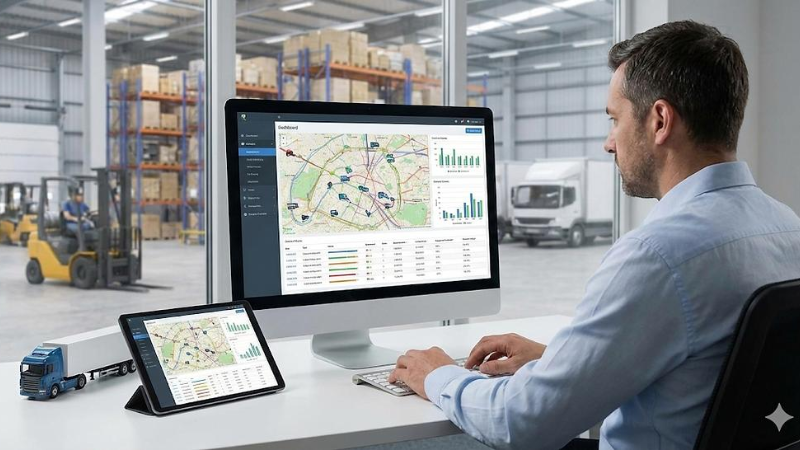
Technology can allow a small logistics company to operate more efficiently without building a huge administrative team.
Depending on your business model, you may use software for:
- Shipment tracking
- Route planning
- Inventory management
- Customer communication
- Invoicing
- Scheduling
- Reporting
- Document management
The source highlights artificial intelligence, big data, real-time tracking, and other technology as important developments in modern logistics.
You do not need the most expensive software available.
Choose tools that solve a real problem.
If a spreadsheet can handle your first few customers, there may be no reason to buy an expensive enterprise system immediately.
Upgrade when the business actually needs it.
How Should You Manage Your Logistics Business Finances?
Cash flow deserves constant attention.
Logistics businesses can have money moving in many directions. You may have customer invoices, carrier payments, fuel expenses, software costs, insurance, payroll, and other operating expenses.
Create a basic system for tracking:
- Revenue
- Operating costs
- Customer payments
- Supplier and carrier payments
- Software expenses
- Insurance
- Taxes
- Other recurring costs
The source recommends monitoring cash coming in and going out, negotiating payment terms where possible, and keeping spending focused on essential activities.
A business can be busy and still run into financial trouble if cash is poorly managed.
What Legal Structure Should You Choose for a US Logistics Business?
Your legal structure is an important decision because it can affect liability, taxes, and administrative requirements.
Common options include:
- Sole proprietorship
- Partnership
- Limited Liability Company (LLC)
- Corporation
The SBA notes that business structure affects personal liability, taxes, fundraising, and the paperwork a business needs to handle.
A sole proprietorship can be simple to establish, but it does not create a separate legal entity and generally leaves the owner personally liable for business obligations.
For a logistics company, where transportation and contractual risks can be significant, it is worth discussing your structure with a qualified attorney or tax professional.
What Licenses and Registrations Does a Logistics Business Need?
This depends heavily on what your company actually does. This is an important distinction.
A logistics company that owns commercial vehicles and transports freight is not subject to exactly the same requirements as a company that arranges transportation as a freight broker.
FMCSA says companies subject to its safety requirements generally need a USDOT Number, and for-hire interstate carriers generally need operating authority as well. FMCSA’s registration system requires businesses to identify whether they operate as a motor carrier, broker, freight forwarder, or another regulated category.
In general, interstate for-hire carriers and companies arranging the transportation of federally regulated commodities may need operating authority in addition to a USDOT Number.
So before registering, first determine which type of logistics business you are actually operating.
Does a Freight Broker Need Additional Authority?
If you plan to operate as a freight broker, there are additional federal requirements.
FMCSA states that first-time brokers apply through the Unified Registration System. Brokers must also provide the required financial security and file a BOC-3. The current FMCSA guidance lists a $75,000 surety bond or trust fund requirement for property brokers and a $300 non-refundable application fee.
The exact requirements can change, so check FMCSA’s current registration guidance before submitting an application.
Do not assume that registering an LLC by itself gives you permission to operate as a freight broker.
It does not.
How Can You Make Sure Your Logistics Business Is Compliant?
Start by identifying every activity your company plans to perform.
Then check the federal, state, and local requirements that apply to those activities.
You may need to deal with:
- Business registration
- Federal tax registration
- State and local licenses
- FMCSA registration
- USDOT requirements
- Operating authority
- Insurance
- Safety requirements
- Vehicle requirements
- Industry-specific rules
FMCSA specifically advises businesses to determine their federal registration needs and state notification or registration requirements before beginning operations.
If you are unsure about a requirement, get professional advice rather than guessing.
A compliance problem can cost far more than getting the correct advice at the beginning.
How Can You Build an Online Presence for Your Logistics Company?
A professional online presence can make a small logistics company look much easier to find and evaluate.
Start with a simple website that explains:
- What you do
- Which areas you serve
- Who you work with
- What makes your service different
- How customers can contact you
Then make your presence on platforms that make sense for your market.
How Can You Find Your First Logistics Clients?
Your first customers may come from your existing network rather than a large advertising campaign. Start with people and businesses you already know.
You can also:
- Connect with the shippers on LinkedIn
- Contact the local manufacturers
- Reach out to retailers
- Attend industry events
- Join logistics communities
- Ask professional contacts for introductions
- Offer a specialized service that solves a clear problem
How Can You Keep Logistics Customers Long Term?
Getting a customer is only half the job.
Reliability is what keeps logistics relationships alive.
Customers want to know that their shipment is being handled properly and that someone will respond when something goes wrong.
Keep customers informed.
If there is a delay, communicate early.
If a problem occurs, explain what happened and what you are doing about it.
The source emphasizes reliable service, communication, personalized attention, and maintaining relationships as important parts of customer retention.
People remember how a business handles problems.
How Can You Grow a Logistics Company After Getting Your First Clients?
Do not expand simply because you have a few successful months.
First, understand what is working.
Look at:
- Your most profitable services
- Your strongest customer segments
- Your busiest routes
- Your operating costs
- Customer retention
- Technology needs
- Staffing requirements
Then decide where the next investment should go.
You might expand into another service area, add warehousing support, improve your technology, add routes, or bring in additional staff.
The source recommends gradually expanding services, routes, technology, and staffing as the client base grows.
Growth should make the business stronger, not simply bigger.
What Mistakes Should You Avoid When Starting a Logistics Business?
A few early mistakes can create unnecessary pressure.
- Purchase pricey equipment before demonstrating demand
- Take on more clients than you can handle.
- Disregard the license requirements
- Don’t overestimate operating and insurance expenses
- The majority of your income comes from a single client.
- Ignore tracking cash flows
- When basic technology could assist, use antiquated manual procedures.
- Make delivery commitments that you are unable to regularly fulfill
- Before your basic operation is stable, expand
Conclusion
Starting a logistics business does not necessarily mean buying a fleet of trucks or renting a giant warehouse from day one.
You can start with a focused service, a specific customer group, and a lean operating model. Your industry knowledge, relationships, and ability to solve problems can be just as important as your starting capital.
Spend some time learning about the market. Pay special attention to financial flow. Don’t ignore the legal restrictions that relate to your specific company model; instead, use technology where it truly saves time or eliminates errors.
Most importantly, build around reliability. A logistics company is trusted with other people’s products, schedules, money, and customer relationships. When you consistently communicate, solve problems, and deliver on your promises, you give customers a reason to stay with you.
FAQ
How do I start a logistics business in the USA?
Start by choosing a specific logistics service, researching your market, and creating a practical business plan. Next, take care of your company’s registration, necessary licenses, technology, insurance, and client acquisition.
Is logistics a good business to start in the USA?
The industry serves businesses that need goods moved, stored, tracked, and delivered. Demand can be influenced by e-commerce, delivery expectations, and the growing use of logistics technology.
What skills do I need to start a logistics company?
Knowledge of transportation, supply chains, customer service, scheduling, negotiation, or business operations can be useful. Your professional experience and industry contacts can also help you find early opportunities.
How can technology help a logistics startup?
Technology can help with shipment tracking, route planning, inventory management, customer communication, and reporting. Even a small company can begin with simple tools and add more advanced systems as it grows.
What licenses does a logistics business need in the USA?
Licensing depends on what your company does, where it operates, and whether it transports or arranges freight. Check the federal, state, and local requirements that apply to your specific business model before starting.
Does a logistics company need a USDOT number?
Some transportation businesses operating commercial vehicles may need a USDOT number, while other logistics models have different requirements. You should first determine how your company will operate and then check the applicable federal rules.
Does a freight broker need special authority?
Freight brokerage can involve additional federal requirements beyond simply registering a business. Make sure you understand the rules that apply to your particular brokerage operation before taking on shipments.
How can I grow a logistics company after getting customers?
Once you have a stable customer base, look at the services, routes, and customer segments performing best. You can then expand gradually by adding services, improving technology, or bringing in qualified staff.