
What if the answer to America’s drone shortage was hiding inside the same supply chains that build windshield wipers? One Detroit startup is betting its entire future on that idea — and it just might work.
Table of Contents
The Birdstop Origin Story: From Bay Area to Motor City
Birdstop didn’t begin in Detroit. Founded in 2019 by CEO Keith Miao — a veteran of the satellite imagery world — the company started in the Bay Area with manufacturing operations in Alabama. But something wasn’t clicking. Defense-grade supply chains were expensive, rigid, and slow. There had to be a smarter way to build unmanned aerial vehicles at scale.
The answer came from an unlikely direction: Detroit’s automotive ecosystem. Michigan state manufacturing incentives nudged Birdstop westward, and the move paid off almost immediately. Today, the company’s 40-person team hand-builds drones inside a former United Auto Workers union building perched right on the Detroit River, with views of Belle Isle. It’s a symbolically perfect location — industrial heritage meeting cutting-edge aerospace.
“The appetite for domestically produced drones is very high. This is a void we’re trying to fill.
— Keith Miao, CEO of Birdstop

How the Auto Industry Powers These Drones
Here’s where Birdstop’s strategy becomes genuinely clever. Modern cars are rolling computers — packed with sensors, cameras, processors, and precision motors. The same electric motor that controls your car’s windshield wipers? With some refitting, it can power a UAV rotor. Birdstop’s engineers figured out that automotive supply chains aren’t just a cost-saving shortcut; they’re a vast, mature, quality-tested ecosystem perfectly suited for drone manufacturing.
Currently, a remarkable 80% of the components in Birdstop’s flagship Fealty drone come from companies that supply automakers. And the cost advantages are staggering. Take cameras: the Fealty requires 10 of them. Sourcing those through traditional defense supply chains means fewer options and prices at least 10 times higher than automotive-grade equivalents that perform just as well.
80%– Parts sourced from auto suppliers
10×– Lower cost vs defense-grade cameras
40– Employees and growing
~18mo– To 100% auto-sourced components
Being based in Detroit also enables something defense contractors in suburban Virginia simply can’t replicate: Birdstop engineers can drive across town to sit face-to-face with parts suppliers. That proximity accelerates collaboration and problem-solving in ways that email chains never can.
Meet the Fealty: A Drone Built for the Real World
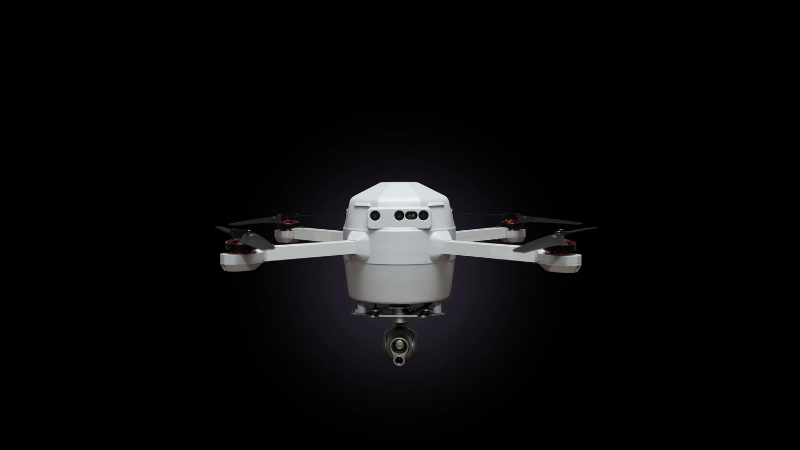
The Fealty is Birdstop’s flagship drone — an autonomous UAV designed for professional, real-world operations rather than hobbyist use. It carries 10 cameras, leverages automotive-grade computing hardware, and is built to be deployed repeatedly in demanding environments from police departments to utility corridors to truck stop parking lots.
Fealty Drone — Key Features
- 10 onboard cameras using automotive-grade optics at a fraction of defense pricing
- 80% of components sourced from U.S. automotive suppliers
- Hand-assembled in Detroit by a domestic workforce
- Designed for autonomous “drone-as-first-responder” deployments
- Suitable for infrastructure monitoring, public safety, and logistics surveillance
- On track to reach 100% domestically sourced parts within 18–24 months
Why American-Made Drones Matter Right Now
The timing of Birdstop’s rise couldn’t be more significant. In December 2025, the Trump administration formally classified foreign-made drones — including those from DJI, the dominant Chinese manufacturer — as a national security threat. That decision essentially shut the door on the most popular commercial drones used by U.S. police departments, utilities, and infrastructure operators.
The resulting demand surge for domestic alternatives has been intense. Yet the supply side remains critically thin. As Miao put it bluntly: “We sometimes talk about the United States manufacturing less than 1% of the world’s drones. That is actually kind of a compliment, because it’s actually far, far less than 1%.”
That gap between demand and domestic supply is exactly the market opportunity Birdstop is racing to fill — and with automotive supply chains enabling faster, cheaper production at scale, they may be better positioned than any other domestic drone maker to do it.
The DJI Ban and Its Ripple Effects
DJI controls an estimated 70–90% of the global consumer and commercial drone market. Its sudden removal from the U.S. market left law enforcement agencies, utilities, farmers, and infrastructure companies scrambling for compliant alternatives. Companies like Birdstop, Skydio, and Shield AI have seen inquiry volumes spike — but manufacturing capacity is the bottleneck. Birdstop’s automotive supply chain approach directly attacks that bottleneck.
Real-World Applications: Where Birdstop Drones Are Flying
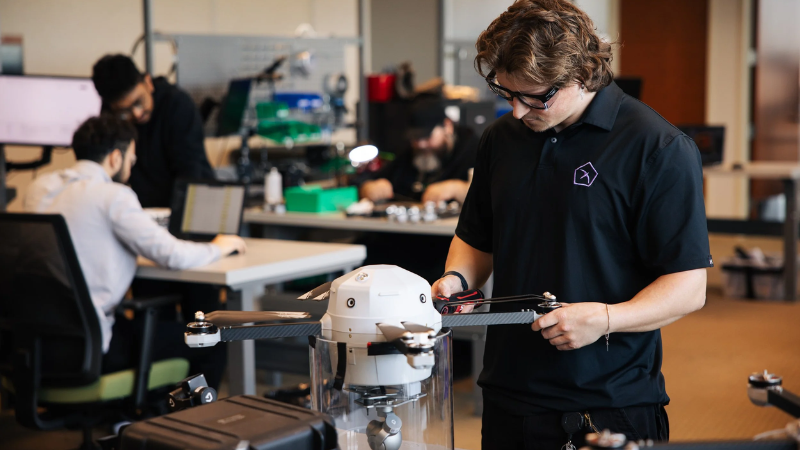
Birdstop isn’t building drones for hobbyists. Its focus is two clearly defined professional sectors: public safety and critical infrastructure monitoring. Both are massive, high-stakes markets with urgent demand for reliable domestic solutions.
Drone-as-First-Responder Programs
Across America, police departments and emergency services are deploying drones as advance scouts — arriving at a scene before human officers to gather intel, reduce risk, and guide response. Birdstop is actively supplying this market, providing autonomous platforms that can launch, navigate, and relay footage without a human pilot on-site.
Trucking & Logistics Monitoring
In May 2026, Birdstop announced a partnership with TSPS, which operates parking facilities for commercial trucks across the country. Birdstop drones will autonomously monitor truck stops to improve parking coordination and operational efficiency — a use case that blends logistics tech with autonomous flight in a genuinely practical way.
Power Grid & Wildfire Risk Monitoring
Perhaps the highest-stakes application: utility companies are increasingly using drones to inspect power lines for damage, vegetation encroachment, and wildfire risks. As California and the Southwest face increasingly severe fire seasons, the ability to quickly and cheaply fly power line corridors could mean the difference between early detection and catastrophe.
What’s Next: A Constellation of Drones on the Ground
Miao has a vision that goes well beyond a single drone model. He sees Birdstop building what he calls a “constellation of satellites that sit on the ground in the form of drones” — fleets of autonomous agents pre-positioned across the country, ready to launch on demand and put eyes on a situation before any human has to enter harm’s way.
“We can put these very helpful, sometimes lifesaving autonomous agents in the sky — and have this fleet of teammates that can respond to situations and get eyes on scene before we have to put humans into harm’s way.
— Keith Miao, CEO of Birdstop
Miao predicts that within a few years, the U.S. could manufacture a million drones annually. With automotive supply chains eliminating the cost and scale barriers that have historically hobbled domestic UAV production, Birdstop believes it can be at the center of that manufacturing surge. The goal of reaching 100% automotive-sourced components within 18–24 months would make the Fealty one of the most fully domestic drones on the market.
Conclusion
Birdstop’s story is about more than one company making drones. It’s a case study in industrial reinvention — proving that America’s manufacturing DNA, embedded in generations of automotive engineering, can be rapidly repurposed for the technologies of tomorrow. If Keith Miao’s vision holds, the Motor City could become as central to America’s drone future as it once was to its automotive past.
Frequently Asked Questions (FAQs) About Birdstop
What is Birdstop and where is it based?
Birdstop is a Detroit-based drone startup founded in 2019 by CEO Keith Miao. Originally headquartered in the Bay Area, the company relocated to Detroit to tap the city’s automotive supply chain. It employs 40 people and builds its Fealty drones in a former UAW building on the Detroit River.
How does Birdstop use the automotive supply chain to build drones?
About 80% of components in Birdstop’s Fealty drone come from U.S. auto industry suppliers — including cameras, electric motors, and computing hardware. These parts are far cheaper than defense-grade equivalents (up to 10x less for cameras alone), and Birdstop plans to reach 100% automotive-sourced components within 18–24 months.
Why are American-made drones in such high demand right now?
In December 2025, the Trump administration declared foreign-made drones — including market leader DJI’s products — a national security threat. This effectively banned the most widely used commercial drones in the U.S., creating urgent demand for domestic alternatives among police departments, utilities, and infrastructure operators.
What is the Birdstop Fealty drone used for?
The Fealty is designed for professional use — primarily public safety (drone-as-first-responder programs for police) and critical infrastructure monitoring (power lines, utility grids, wildfire risk). In 2026, Birdstop also launched a partnership with TSPS to monitor commercial truck stop parking operations.
Is Birdstop a competitor to DJI?
Not in the consumer market. Birdstop focuses on professional and enterprise applications like public safety and infrastructure. In the commercial segment where DJI also competed before its U.S. ban, Birdstop is directly positioned to fill the gap left by Chinese drone manufacturers.
How many drones does the US manufacture each year?
Currently far less than 1% of the world’s drones are made in the U.S. — a number Birdstop’s CEO describes as “actually kind of a compliment” given how much lower the real figure is. Miao predicts domestic production could scale to one million drones annually within a few years.
What makes Birdstop different from other American drone companies?
Birdstop’s core differentiator is its automotive supply chain strategy. While most domestic drone makers rely on expensive defense-grade or imported parts, Birdstop sources the majority of its components from U.S. auto suppliers — dramatically lowering costs, improving scalability, and enabling faster iteration through close collaboration with nearby Detroit-area suppliers.
Can Birdstop drones be used for wildfire detection?
Yes. Birdstop targets utility companies and grid operators as customers, with a focus on inspecting power lines for wildfire risks — especially in fire-prone Western states. Autonomous drones can survey corridors far more frequently and cheaply than manned aircraft or manual ground inspections.