
America has always been a land of big dreamers. From the earliest days of the nation to the digital age of today, the United States has produced some of the most brilliant, bold, and innovative entrepreneurs the world has ever seen.
These men and women did not just build businesses. They changed the way we live, work, travel, communicate, shop, and dream. They created millions of jobs, built entire industries from scratch, and left legacies that continue to shape our world every single day.
In this article, we look at the Greatest entrepreneurs in U.S. history — who they were, what they built, and most importantly, what lessons we can learn from them today.
Whether you are a student, a startup founder, a small business owner, or simply someone who loves inspiring stories — this article is for you.
What Makes a Great Entrepreneur?
Before we dive into the list, let us answer one simple question — what separates a great entrepreneur from everyone else?
After studying the lives of America’s greatest business builders, a few common traits stand out:
| Trait | Description |
|---|---|
| Vision | Ability to see something others cannot yet see |
| Persistence | Never giving up, even after repeated failure |
| Risk-Taking | Willingness to bet everything on an idea |
| Innovation | Finding better ways to solve real problems |
| Leadership | Inspiring others to believe in the same dream |
| Adaptability | Changing direction when the world changes |
| Customer Focus | Always putting the customer’s needs first |
Every entrepreneur on this list had most — if not all — of these qualities. Let us look at their stories.
1. Benjamin Franklin (1706–1790)
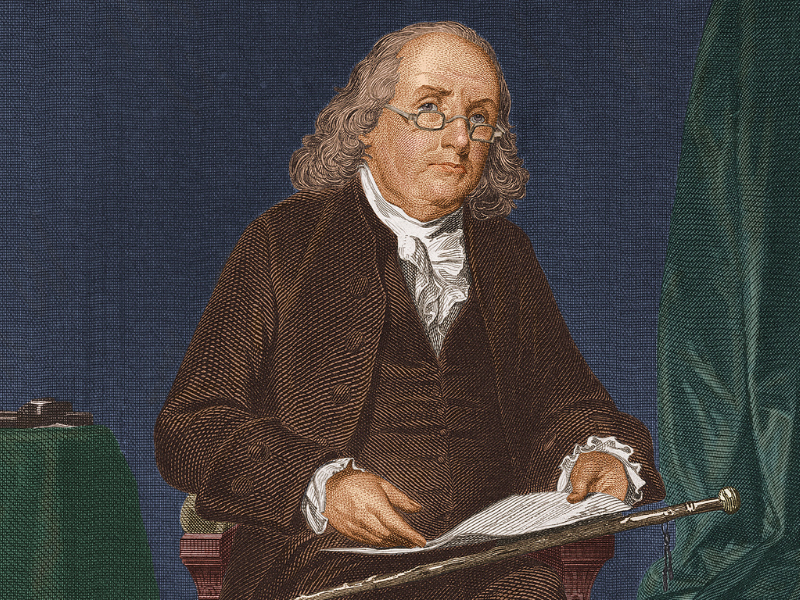
America’s First Great Entrepreneur
Most people know Benjamin Franklin as a Founding Father of the United States. But he was also one of America’s earliest and greatest entrepreneurs.
Franklin started as a printer’s apprentice with almost nothing. He worked hard, saved money, and eventually opened his own printing business. He then launched one of the most successful newspapers in colonial America — the Pennsylvania Gazette.
But Franklin did not stop there. He went on to:
- Found the first public library in America
- Start the first fire insurance company in the colonies
- Establish the University of Pennsylvania
- Invent the lightning rod, bifocals, and the Franklin stove
- Build a postal system that became the foundation of the modern U.S. Postal Service
Key Lesson From Benjamin Franklin:
“An investment in knowledge pays the best interest.”
Franklin believed that learning never stops. He educated himself constantly, and every new thing he learned became a new opportunity. His lesson for entrepreneurs today — keep learning, keep growing, and never be satisfied with what you already know.
2. Andrew Carnegie (1835–1919)
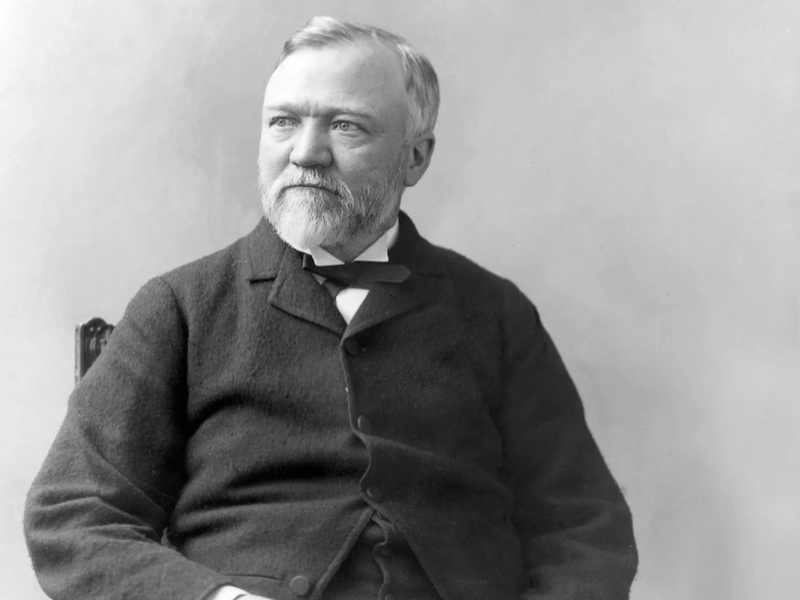
The Steel King Who Gave It All Away
Andrew Carnegie came to America from Scotland as a poor immigrant boy. He started working at age 13 for just a few dollars a week. By the time he retired, he was one of the richest men in human history.
Carnegie built the Carnegie Steel Company, which became the largest and most profitable steel company in the world. He sold it to J.P. Morgan in 1901 for $480 million — equivalent to tens of billions of dollars today.
But what truly sets Carnegie apart is what he did next. He gave away nearly all of his fortune. He built over 2,500 public libraries across the United States and the world. He funded universities, concert halls, and peace organizations.
Carnegie believed it was a “disgrace to die rich.” He donated approximately 90% of his total wealth before his death.
Key Lesson From Andrew Carnegie:
“The man who dies rich, dies disgraced.”
Carnegie teaches us that true success is not just about accumulating wealth — it is about what you do with it. He also showed that no background is too humble to start from. If a poor immigrant boy could become the richest man in the world, anyone with determination can achieve great things.
3. John D. Rockefeller (1839–1937)
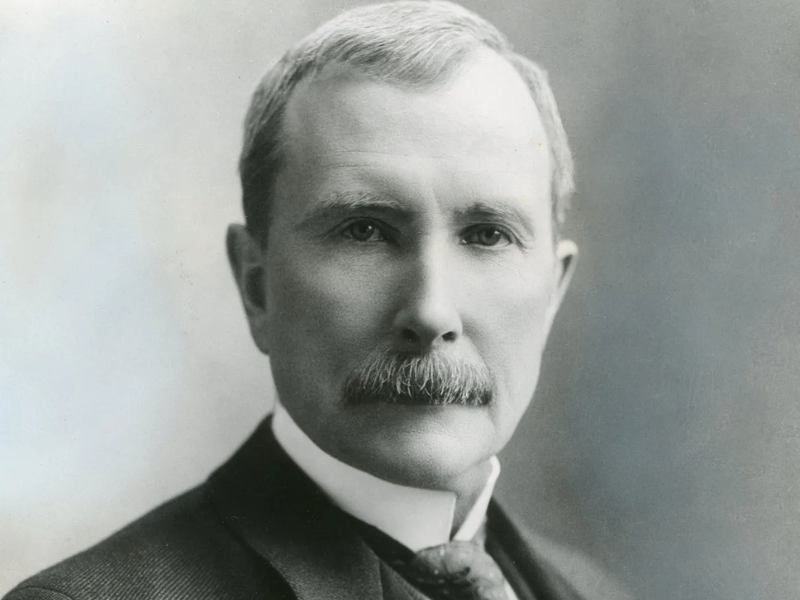
The Man Who Built the Oil Empire
John D. Rockefeller was the founder of Standard Oil and is widely considered the wealthiest American of all time. His fortune at its peak was equivalent to nearly $400 billion in today’s money.
Rockefeller started with nothing and built an oil empire by focusing on efficiency, cost-cutting, and ruthless competition. Standard Oil controlled nearly 90% of all oil refining in the United States at its peak.
While his business methods were controversial — leading to the government breaking up Standard Oil in 1911 — his impact on American business cannot be denied. He essentially created the modern corporate structure and showed how a single vision could transform an entire industry.
Rockefeller was also a major philanthropist, donating over $500 million during his lifetime and founding the University of Chicago and the Rockefeller University.
Key Lesson From John D. Rockefeller:
“Don’t be afraid to give up the good to go for the great.”
Rockefeller’s lesson is about focus and efficiency. He did not try to do everything — he focused on one industry and dominated it completely. For entrepreneurs today, the lesson is clear — find your niche, go deep, and be the best at what you do.
4. Henry Ford (1863–1947)
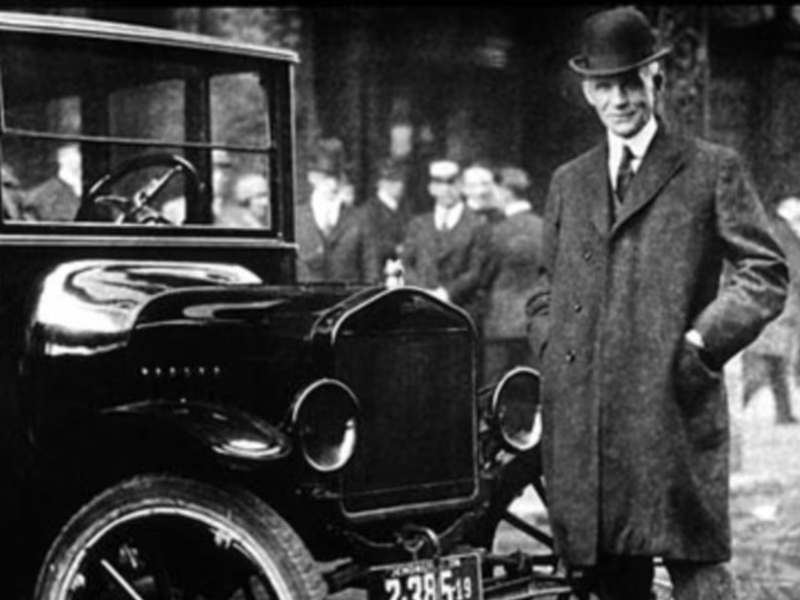
The Man Who Put America on Wheels
Henry Ford did not invent the automobile. But he changed everything about how it was made and who could afford one. Ford founded the Ford Motor Company in 1903 and introduced the assembly line manufacturing process that would revolutionize not just the auto industry — but all of manufacturing.
Before Ford, cars were expensive luxury items only the rich could afford. Ford’s assembly line made the Model T affordable for the average American worker. By 1920, over half of all cars in the world were Ford Model Ts.
Ford also made history by paying his workers $5 a day — nearly double the standard wage at the time. His reasoning was brilliant — if workers earned more, they could afford to buy the cars they were building. This idea helped create the American middle class.
Key Lesson From Henry Ford:
“If everyone is moving forward together, then success takes care of itself.”
Ford’s greatest lesson is about making things accessible. He did not just build a great product — he made sure ordinary people could afford it. For today’s entrepreneurs, the lesson is — think about your customer’s ability to pay, not just the product’s quality.
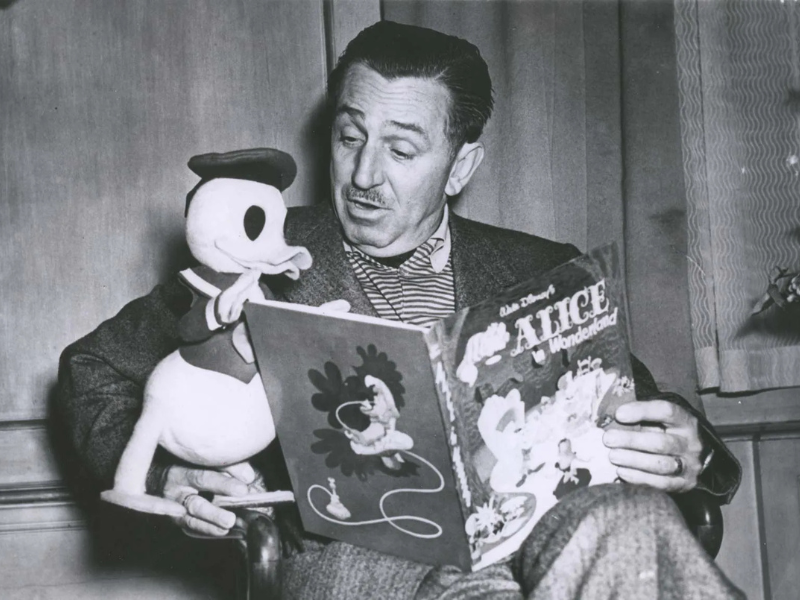
5. Walt Disney (1901–1966)
The Dream Maker
Walt Disney is proof that creativity is a business superpower. Disney started as a struggling artist who was once famously fired from a newspaper because his editor said he “lacked imagination.” He then started a cartoon studio that went bankrupt.
But Walt Disney kept going. He created Mickey Mouse, built the first synchronized sound cartoon, pioneered full-color animation, and produced Snow White — the world’s first feature-length animated film.
Then he did something nobody thought was possible — he built Disneyland, the world’s first modern theme park. When Disneyland opened in 1955, it was called “Disney’s Folly” by critics. Today, the Disney company is worth over $200 billion.
Walt Disney faced bankruptcy twice, rejection hundreds of times, and was told his ideas were impossible — constantly. But he never stopped believing in the power of imagination.
Key Lesson From Walt Disney:
“All our dreams can come true, if we have the courage to pursue them.”
Disney’s lesson is about resilience and imagination. Every great entrepreneur faces rejection and failure. The ones who succeed are the ones who keep going anyway. Disney also teaches us that emotional connection is a business strategy — people do not just buy products, they buy feelings and experiences.
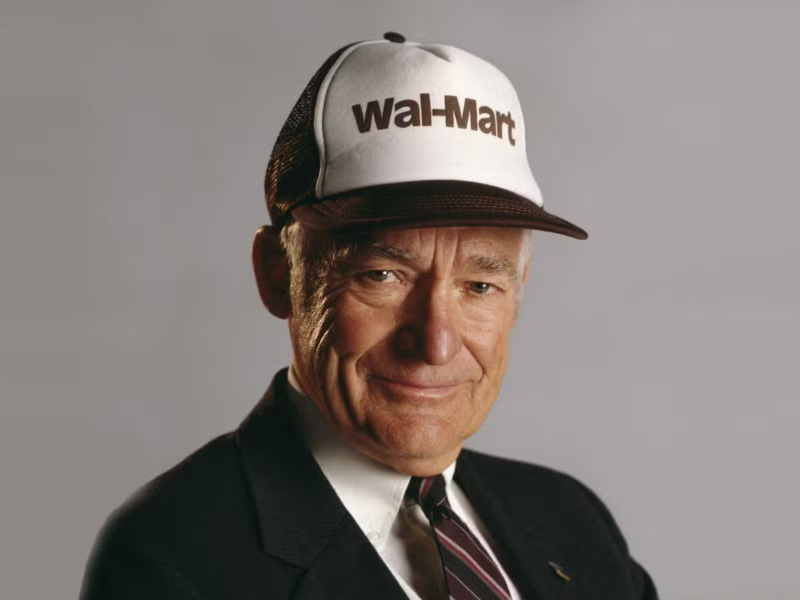
6. Sam Walton (1918–1992)
The King of Retail
Sam Walton built Walmart from a single small variety store in Rogers, Arkansas into the largest retail company in the world. Today, Walmart employs over 2.3 million people and generates revenues of over $600 billion per year.
Walton’s formula was simple but powerful — offer the lowest prices possible, every single day. He obsessed over cutting costs so he could pass savings to customers. He drove the same beat-up pickup truck for decades even when he was a billionaire.
Walton was also a master of learning from competitors. He regularly visited rival stores, studied their best practices, and implemented them in Walmart. He believed you could learn something valuable from everyone.
Key Lesson From Sam Walton:
“There is only one boss — the customer. And he can fire everybody in the company, from the chairman on down, simply by spending his money somewhere else.”
Walton’s lesson is about humility and customer obsession. Despite becoming the richest man in America at one point, he never let success go to his head. He kept things simple, stayed close to his customers, and never stopped improving.
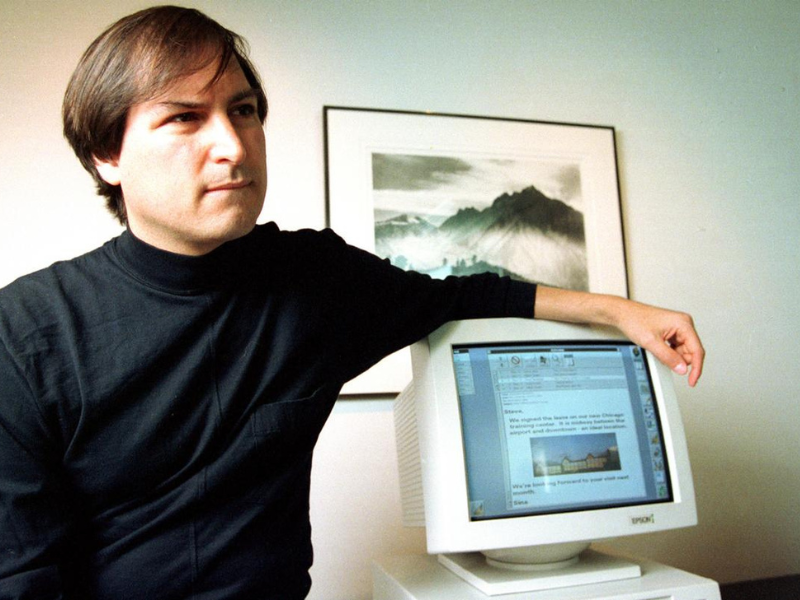
7. Steve Jobs (1955–2011)
The Innovator Who Changed Everything
Steve Jobs is arguably the most iconic entrepreneur of the modern era. As the co-founder of Apple, he did not just build a company — he created entirely new product categories that changed the way humans interact with technology.
Jobs gave us the personal computer, the iPod, the iPhone, and the iPad. Each of these products did not just improve existing technology — they replaced entire industries and created new ones.
What made Jobs extraordinary was his obsession with design and user experience. He believed technology should be beautiful, simple and intuitive. He famously said that “design is not just what it looks like — design is how it works.”
Jobs was fired from Apple in 1985 — the company he co-founded. He came back in 1997 and turned Apple from near bankruptcy into the most valuable company in the world.
Key Lesson From Steve Jobs:
“The people who are crazy enough to think they can change the world are the ones who do.”
Jobs teaches us the power of thinking differently. He refused to accept the world as it was — he always asked “why not?” when everyone else said “it can’t be done.” His lesson for entrepreneurs — never compromise on quality, and never stop pushing the boundaries of what is possible.
Read Also- Top 10 Global Leaders Who Changed the World With One Bold Decision | Global Visionary Council
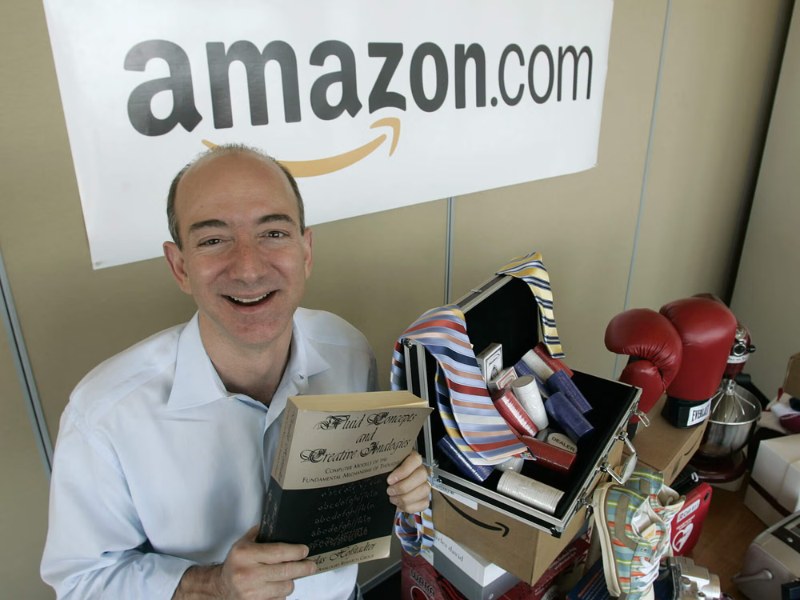
8. Jeff Bezos (Born 1964)
The Man Who Built the Everything Store
Jeff Bezos started Amazon in 1994 out of his garage, selling books online. At the time, most people thought selling books on the internet was a crazy idea. Today, Amazon is worth over $1.8 trillion and sells virtually everything on earth.
But Bezos did not just build an online store. He built:
- Amazon Web Services (AWS) — the world’s largest cloud computing platform
- Amazon Prime — a subscription service with hundreds of millions of members
- Kindle — the device that transformed book reading
- Amazon Alexa — a voice-activated AI assistant
- Blue Origin — a private space exploration company
Bezos is famous for his long-term thinking. He was willing to lose money for years while investing in growth, because he knew that building something truly great takes time.
Key Lesson From Jeff Bezos:
“We are stubborn on vision. We are flexible on details.”
Bezos teaches the power of patient, long-term thinking. In a world obsessed with quick results, Bezos always planned for the long game. His lesson — be clear on where you are going, but be flexible about how you get there.
9. Oprah Winfrey (Born 1954)
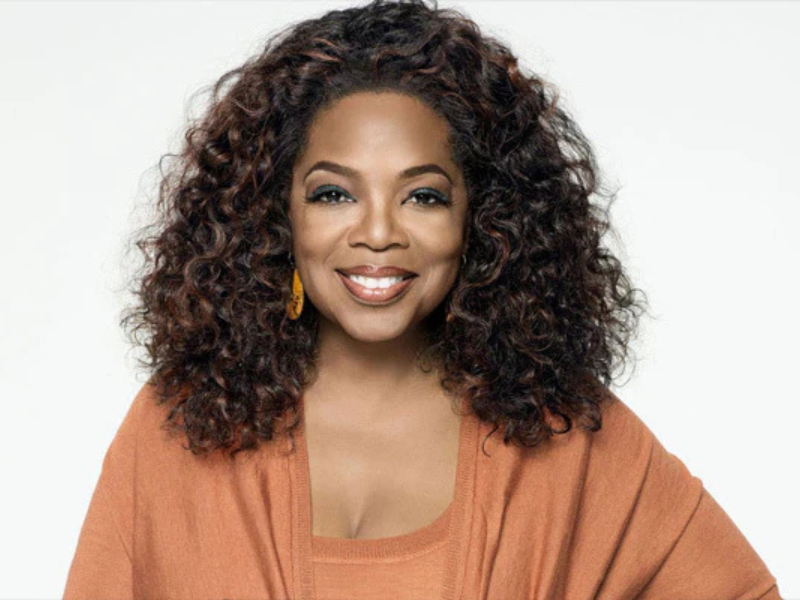
From Poverty to Power
Oprah Winfrey’s story is one of the most inspiring in American history. Born into extreme poverty in rural Mississippi, she faced tremendous hardship and abuse in her early life. But through education, hard work, and extraordinary talent, she became the most powerful woman in the entertainment industry.
The Oprah Winfrey Show ran for 25 years and was the highest-rated talk show in American television history. Oprah became the first Black female billionaire in American history.
But Oprah did not stop with television. She built:
- Harpo Productions — her own production company
- OWN (Oprah Winfrey Network) — her own cable TV network
- O Magazine — one of the most successful magazine launches in history
- A book club that became the most powerful book recommendation platform in the world
Oprah succeeded because she was deeply authentic. She spoke from the heart, shared her own struggles, and connected with audiences in a way that felt personal and real.
Key Lesson From Oprah Winfrey:
“The biggest adventure you can take is to live the life of your dreams.”
Oprah’s lesson is about the power of authenticity and connection. In business, people buy from those they trust and relate to. Oprah built a billion-dollar empire simply by being genuinely herself. Her lesson — your story is your greatest business asset.
10. Elon Musk (Born 1971)
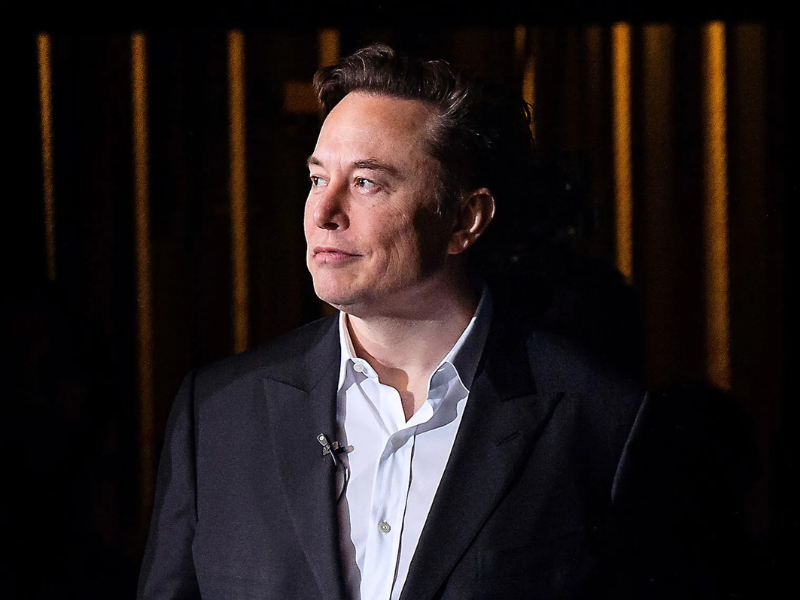
The Entrepreneur of the Future
Elon Musk may be the most ambitious entrepreneur alive today. Born in South Africa, Musk came to America with almost nothing and a burning desire to change the world.
He has built or co-founded:
- PayPal — revolutionized online payments
- Tesla — transformed the auto industry with electric vehicles
- SpaceX — making space travel affordable and working toward making humans multiplanetary
- Neuralink — developing brain-computer interface technology
- The Boring Company — building underground transportation tunnels
- xAI — an artificial intelligence company
Musk is famous for taking risks that most people would consider insane. When both Tesla and SpaceX were on the verge of bankruptcy in 2008, he put his last dollars into both companies — and both survived.
Key Lesson From Elon Musk:
“When something is important enough, you do it even if the odds are not in your favor.”
Musk teaches us the power of audacious goals and extreme commitment. He does not think small — he thinks about problems at a planetary scale. His lesson for entrepreneurs — do not limit your thinking to what seems realistic today. Think about what the world needs, and work backward from there.
Key Lessons From the Best Entrepreneurs
After studying all of these remarkable people, here are the most important lessons every entrepreneur should remember:
Lesson 1: Failure Is Not the End
Every single entrepreneur on this list failed — sometimes spectacularly. Walt Disney went bankrupt. Steve Jobs was fired from his own company. Henry Ford’s first two companies failed. Failure is not a sign to stop — it is a part of the journey.
Lesson 2: Solve Real Problems
The greatest entrepreneurs did not build businesses just to make money. They identified real problems that real people had and found better solutions. Money was the result — not the goal.
Lesson 3: Think Long-Term
Every person on this list was willing to sacrifice short-term comfort for long-term success. They planted trees under whose shade they knew they might not sit for years.
Lesson 4: Build Great Teams
No entrepreneur succeeds alone. Carnegie had brilliant managers. Jobs had Steve Wozniak. Bezos built an incredible team of engineers. Success is always a team sport.
Lesson 5: Never Stop Learning
Franklin read everything he could get his hands on. Walton visited competitors’ stores. Musk taught himself rocket science from textbooks. The best entrepreneurs are the best learners.
7 Additional Powerful Points
Point 1: America’s Culture of Entrepreneurship Is Unique
The United States has a cultural attitude toward failure and risk that is unique in the world. In many countries, business failure carries a deep social stigma. In America, failure is often seen as a badge of experience and a step toward eventual success. This cultural difference is one of the biggest reasons America has produced so many of the world’s greatest entrepreneurs.
Point 2: Immigrants Have Built Much of American Business
A striking number of America’s greatest entrepreneurs were immigrants or children of immigrants. Andrew Carnegie came from Scotland. Elon Musk came from South Africa. Sergey Brin (Google) came from Russia. This is a powerful reminder that great ideas and great ambition know no borders.
Point 3: Disruption Is the Common Thread
Every entrepreneur on this list disrupted an existing industry. Ford disrupted transportation. Walton disrupted retail. Jobs disrupted music, phones, and computers. Bezos disrupted retail again. The lesson — the greatest business opportunities often lie in taking an existing industry and doing it dramatically better.
Point 4: Philanthropy and Legacy Matter
Almost every great American entrepreneur became a major philanthropist. Carnegie gave away 90% of his wealth. Rockefeller funded universities and medical research. Gates and Buffett have pledged to give away their fortunes. This pattern shows that the greatest entrepreneurs see their wealth as a tool for positive change, not just a personal reward.
Point 5: The Best Entrepreneurs Are Obsessed With Their Customers
Whether it was Ford making cars affordable, Walton cutting prices, or Bezos offering fast delivery — the greatest entrepreneurs shared a deep, almost irrational obsession with making things better for their customers. This customer obsession is the single most reliable predictor of long-term business success.
Point 6: Technology Has Always Been the Great Equalizer
From Franklin’s printing press to Bezos’s internet platform, technology has always been the tool that allowed entrepreneurs to scale their ideas rapidly. Today, with artificial intelligence, cloud computing, and global connectivity, the barrier to starting a transformational business has never been lower. The next great American entrepreneur could be anyone — including you.
Point 7: The Story Is Never Over
Most people assume that entrepreneurship follows a simple arc — idea, struggle, success, done. But the greatest entrepreneurs never stopped innovating. Ford kept improving his cars. Disney kept creating new stories. Bezos kept inventing new businesses. Musk is still launching rockets. The lesson — the best entrepreneurs never think they are finished. There is always a next chapter.
Conclusion
The best entrepreneurs in U.S. history were not just business people. They were visionaries, dreamers, problem-solvers, and risk-takers who refused to accept the world as it was and worked relentlessly to make it better.
From Benjamin Franklin’s printing press to Elon Musk’s rockets, the story of American entrepreneurship is the story of human ambition, creativity, and the unshakeable belief that things can always be better.
These legends did not just build companies. They built the modern world.
And here is the most exciting part — the story is not over. The next chapter of American entrepreneurship is being written right now, perhaps by someone reading this article today.
The tools are better than ever. The opportunities are bigger than ever. The only question is — are you ready to start?
Frequently Asked Questions (FAQs)
1. Who is considered the greatest entrepreneur in U.S. history?
There is no single answer, but names like Benjamin Franklin, Andrew Carnegie, Henry Ford, Steve Jobs, and Jeff Bezos are consistently mentioned among the greatest entrepreneurs in U.S. history. Each changed the world in a different and profound way.
2. What qualities do the best entrepreneurs share?
The best entrepreneurs share qualities like vision, persistence, risk-taking, customer obsession, adaptability, and a willingness to learn from failure. Most importantly, they are driven by a desire to solve real problems — not just to make money.
3. Can anyone become a great entrepreneur?
Yes — but it requires hard work, the right mindset, continuous learning, and resilience. Many of America’s greatest entrepreneurs started with nothing. Background, money, and education matter less than determination and the willingness to keep going when things get hard.
4. What is the most important lesson from American entrepreneurs?
The single most important lesson is probably this — failure is not the end. Every great American entrepreneur failed multiple times before they succeeded. What made them great was not avoiding failure — it was refusing to let failure be the final word.
5. How did American entrepreneurs change the world?
American entrepreneurs changed the world by creating new industries, new technologies, new jobs, and new ways of living. From the assembly line to the smartphone, from online shopping to electric cars — American entrepreneurship has shaped the modern world in ways that touch every person on the planet.
6. Who is the richest entrepreneur in U.S. history?
In terms of inflation-adjusted wealth, John D. Rockefeller is often considered the richest American entrepreneur in history. In modern terms, figures like Elon Musk and Jeff Bezos have reached record levels of wealth.
7. What industries have American entrepreneurs dominated?
American entrepreneurs have dominated industries including oil, steel, automobiles, retail, technology, entertainment, aerospace, finance, and artificial intelligence — and they continue to lead innovation in virtually every sector.